Karate or Taekwondo: Which Martial Art Is Right for You?
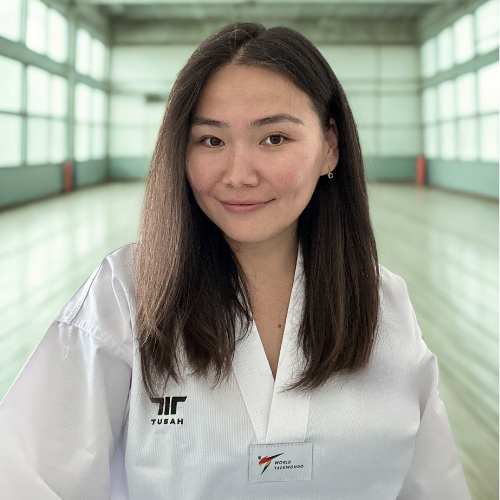
Which One Should You Choose?
Neither Karate nor Taekwondo is universally "better" as both can build fitness, confidence and discipline. Choose Karate if you're drawn to hand techniques, grounded stances and kata. Choose Taekwondo if you love movement, kicking and variety. The most important factor? The club, instructor and whether you enjoy going back. You don't need to be fit or flexible to start.
In this guide:
Karate or Taekwondo: Which Martial Art Is Right for You?
So you’ve read Karate vs Taekwondo: What’s the Difference? You know both have strong physical and mental benefits — but one question remains:
Which one should you actually choose?
There isn’t one universal answer. The “better” martial art isn’t the one with the most kicks or toughest reputation. It’s the one that fits your goals, personality, body, schedule and the training environment you enjoy.
First: neither martial art is simply “better".
Karate and Taekwondo overlap quiet a lot. Both can develop fitness, coordination, balance, confidence and technical control. Research into hard martial arts in adults has found potential benefits across physical, psychological and cognitive areas, although study quality varies (Rios et al., 2018).
Both have structured progression: you start as a beginner, learn fundamentals, practise repeatedly and work towards higher grades.
The real difference is less about which is superior and more about what kind of training you want to spend your time doing.
Choose Karate if you are drawn to hand techniques and traditional forms.
Karate includes a broad range of punches, blocks, kicks and striking. Traditional training commonly includes kihon (basics), kata (forms) and kumite (sparring).
Karate may appeal if you enjoy:
precise hand techniques and combinations
strong, grounded stances
studying kata and traditional forms
a wide variety of styles and approaches
Of course, Karate isn’t just “the punching art”. A Shotokan school can feel very different from Kyokushin or Goju-ryu, so visiting a class matters more than stereotypes.
Choose Taekwondo if you love movement, kicking and variety
Taekwondo is particularly recognisable for its extensive kicking such as front, side, roundhouse, turning, jumping and complex combinations plus footwork, pad work, poomsae and sparring.
Reviews of Taekwondo training suggest potential benefits for aerobic fitness, body composition and flexibility (Bridge et al., 2014).
Taekwondo may appeal if you enjoy:
Movement. Constant changes in position, distance and direction.
Kicking. Developing leg strength, control and flexibility.
Variety. A class that moves between technical drills, pads, partner work and forms.
Progression. Clear goals to work towards.
“But I’m not flexible enough for Taekwondo”
You don’t need to be flexible before you start. Improving flexibility is part of the process.
You won’t walk into your first class throwing perfect head-height kicks. You start where you are with low kick, wobbly balance, tight hips. That’s normal.
Regular training can help improve mobility and technique over time. Research found evidence suggesting improvements in flexibility and aerobic capacity, though not every practitioner experiences the same outcomes (Bridge et al., 2014).
The important word is progress.
“I’m an adult beginner. Am I too old?”
Adults can start later and still benefit.
In one small study, adults over 40 doing age-adapted Taekwondo showed improvements in cognitive measures like reaction and information processing speed (Pons van Dijk et al., 2013). It was a small study (24 volunteers, 19 completed), so we shouldn’t overstate it.
More broadly, a systematic review of martial arts and combat sports in adults found some evidence of positive associations with cognitive and well-being outcomes, while emphasising research is still developing (Ciaccioni et al., 2024).
For many adults, the biggest challenge isn’t age. It’s finding something you genuinely want to keep doing.
What about fitness and injuries?
You don’t need to get fit before joining a club :) that’s like needing to be a good swimmer before entering a pool.
Both arts involve physical contact and carry some risk. Research on Taekwondo notes lower-extremity injuries and contusions are common, particularly in competition (Thomas et al., 2017; García Blanco et al., 2025). Karate competition research also reports varied injuries, including contusions and head/neck locations (Thomas & Ornstein, 2018).
Competition data isn’t the same as a beginner’s recreational class. Look at how a club manages training: progressive technique, protective equipment, managed intensity and no pressure to do more than you’re ready for.
The mental side: where both have a lot in common
Although they look different, their values are similar. Taekwondo’s five tenets are Courtesy, Integrity, Perseverance, Self-Control, Indomitable Spirit.
Both emphasise respect, discipline and personal development. Research into martial arts and mental health suggests potential benefits for cognitive and well-being outcomes, though evidence is mixed and more high-quality research is needed (Ciaccioni et al., 2024).
They’re not a cure for stress. But they can provide an hour when your brain has no choice but to focus on right now.
So… Karate or Taekwondo?
You are looking for… | You may prefer… |
More hand techniques | Karate |
Strong kicking emphasis | Taekwondo |
Traditional kata | Karate |
Dynamic kicking combinations | Taekwondo |
Movement-heavy training | Taekwondo |
Philosophy & personal development | Both |
Fitness & coordination | Both |
Belt progression | Both |
Supportive community | Depends on the club |
The club matters more than the label
You can read endless debates, but the instructor, atmosphere, safety culture and people around you decide whether you enjoy it.
For families it’s even more interesting when a child starts, Mum or Dad watches from the side, thinks “that looks fun,” and suddenly you’re training together.
There is only one way to find out
Reading helps, but you need to try a class to answer: Do I enjoy this? Do I feel comfortable here? Do I want to come back next week?
At Artos Taekwondo Portsmouth we welcome complete beginners 8+, adults and families. No need to be flexible or athletic - just willing to learn.
References
Bridge, C. A., Ferreira da Silva Santos, J., Chaabène, H., Pieter, W., & Franchini, E. (2014). Physical and physiological profiles of taekwondo athletes. Sports Medicine, 44(6), 713–733. https://doi.org/10.1007/s40279-014-0159-9
Ciaccioni, S., Castro, O., Bahrami, F., Tomporowski, P. D., Capranica, L., Biddle, S. J. H., Vergeer, I., & Pesce, C. (2024). Martial arts, combat sports, and mental health in adults: A systematic review. Psychology of Sport and Exercise, 70, 102556. https://doi.org/10.1016/j.psychsport.2023.102556
García Blanco, C., Vazquez-Mendez, A., Conde, O., & Mollinedo-Cardalda, I. (2025). Epidemiology of injuries in high-performance taekwondo: A systematic review. Cureus, 17(9), e93356. https://doi.org/10.7759/cureus.93356
Pons van Dijk, G., Huijts, M., & Lodder, J. (2013). Cognition improvement in Taekwondo novices over 40: Results from the SEKWONDO Study. Frontiers in Aging Neuroscience, 5, 74. https://doi.org/10.3389/fnagi.2013.00074
Rios, S. O., Marks, J., Estevan, I., & Barnett, L. M. (2018). Health benefits of hard martial arts in adults: A systematic review. Journal of Sports Sciences, 36(14), 1614–1622. https://doi.org/10.1080/02640414.2017.1406297
Thomas, R. E., & Ornstein, J. (2018). Injuries in karate: Systematic review. The Physician and Sportsmedicine, 46(3), 279–303. https://doi.org/10.1080/00913847.2018.1472510
Thomas, R. E., Thomas, B. C., & Vaska, M. M. (2017). Injuries in taekwondo: Systematic review. The Physician and Sportsmedicine, 45(4), 372–390. https://doi.org/10.1080/00913847.2017.1369193


Comments